 The morning of my LXVIIIth birthday was a sunny and warm September 17th. I decided to take advantage of the nice weather forecast and the smaller crowds I expected to visit the Lincoln Memorial and its newly opened Undercroft. I also saw an opportunity to finally visit the Old Post Office Clock Tower after several unsuccessful attempts.
Old Post Office Clock Tower
Rather than driving SB and dealing with the challenge of finding parking, I parked at the Metro station near my home. I took the subway to the Federal Triangle station, which was across the street from the Waldorf-Astoria Hotel, which now leases the building where the clock tower is located. Previously, I’d visited while the tower was closed for renovation, and then I missed the limited hours when it is open to the public. This time, I arrived shortly after its opening for the day. Although the site was set up to handle a crowd, I arrived when only a handful of guests were there, so there was no wait to enter.
Although the clock tower is part of the National Park Service, it appeared to be staffed by hotel security, who saw that I signed in upon arrival and made my way to the public areas of the tower. Before that, though, an area on the lower level displayed the tower’s history. The first elevator stopped on the 9th floor, and I could see the hotel’s atrium. A second elevator delivered me to the 12th-floor observation deck.
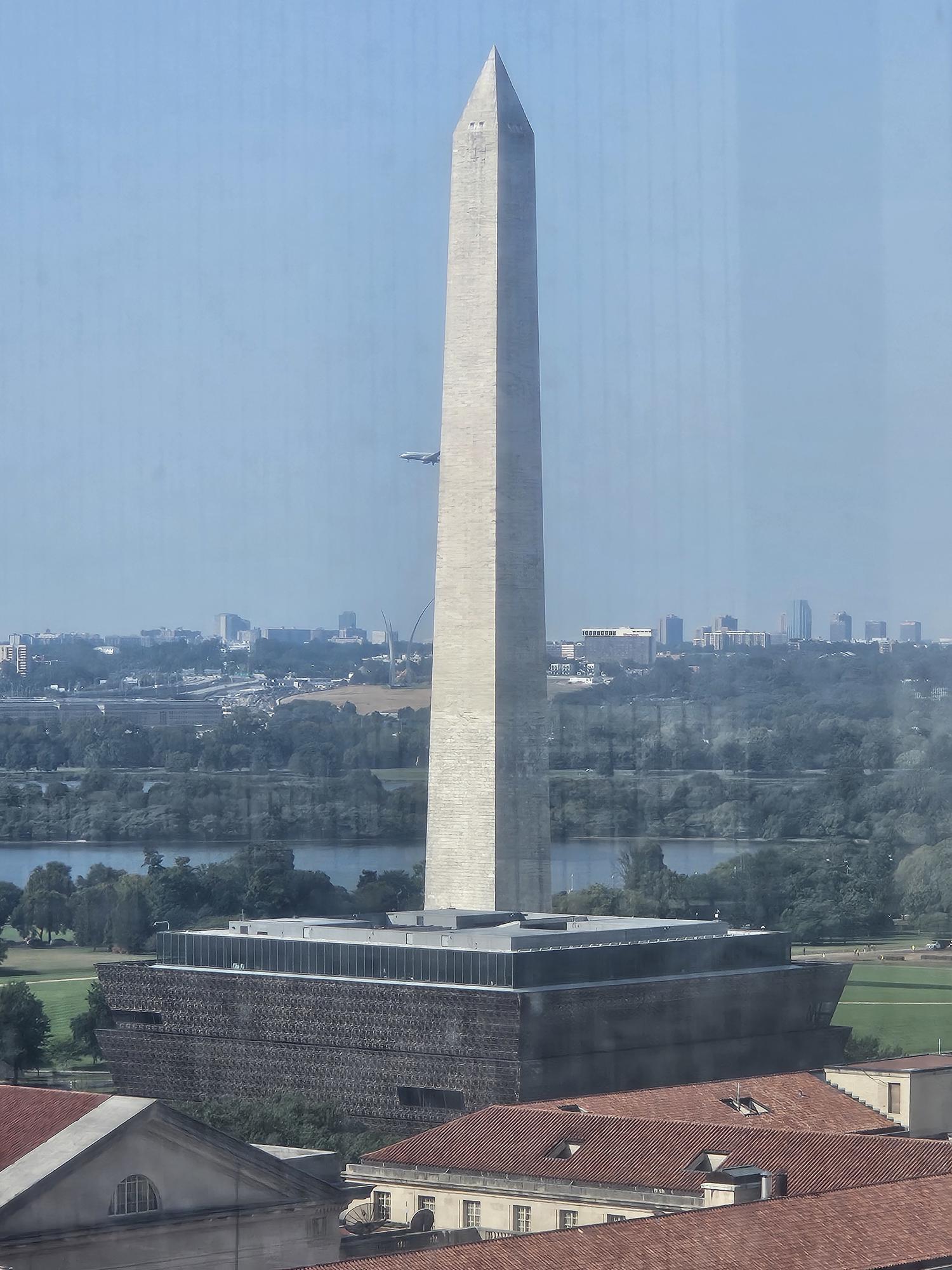
The information on the Web indicates that from the deck’s 270-foot height, one can potentially see twelve or more miles from the tower’s location on Pennsylvania Avenue, NW. I took multiple pictures from each window, including a few from the sides where protective bars did not obstruct the view. I recall hearing that the tower is the third highest point in Washington. From there, I could also see the Washington Monument, the Shrine of the Immaculate Conception, and the United States Capitol building.
Some of the pictures are below:
The Lincoln Memorial and Undercroft
 After leaving the clock tower, I took the subway to Union Station and boarded one of the trolley that tour the city’s uptown. The tour operator provided some historical information about different sites, including the Capitol, along the way.
As we approached the Lincoln Memorial, she mentioned that it had 36 columns, one for each state in the Union at the time of Lincoln’s death in 1865 and 87 steps for the “four score and seven years” the late president had referenced in his 1863 Gettysburg Address.
The last time I visited the memorial, scaffolding and a tarp covered the facade during its renovation. This time, it was all gone, and the memorial’s Undercroft was open to the public. I don’t know how accessible the memorial was before, but I was impressed by how easy it was to access the facilities that day. I ordered a ticket the day before, so I had no trouble entering.
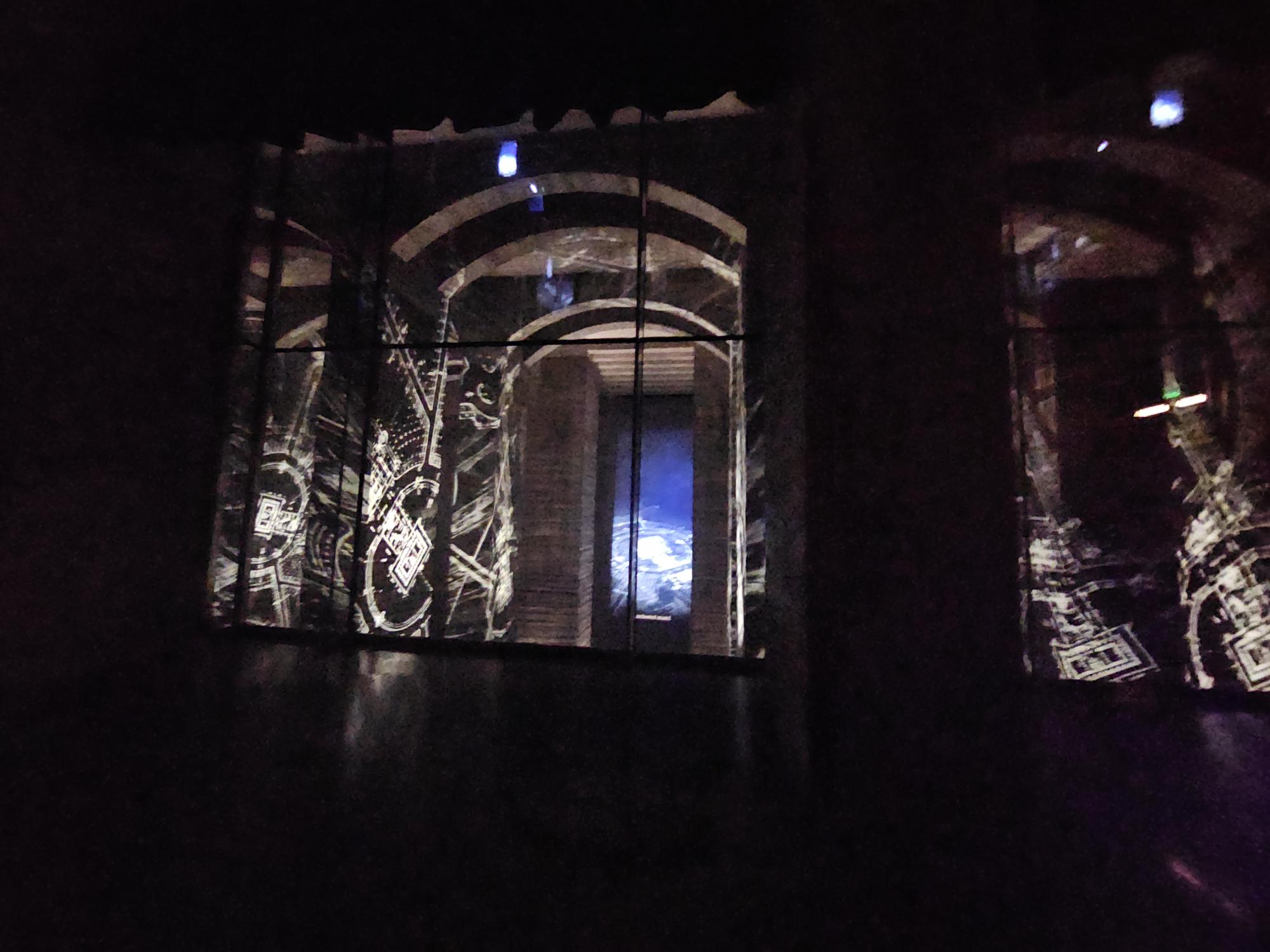
The website describes the Undercroft as a 15,000-square-foot previously unseen exhibit area that reveals the massive concrete foundations supporting the memorial, and a “cavernous structural chamber that has stood hidden since the memorial opened in 1922. The undercroft features: a soaring grid of concrete columns that support the memorial above; interactive exhibits that explore the memorial’s construction; multimedia presentations that trace the memorial’s role in American history and civil right.” Copies of both the Emancipation Proclamation and the 13th Amendment to the Constitution were also on display. (I had previously seen a news report that the originals had been there. While I admit I would have loved to see them, that simply wasn’t the environment for fragile documents.)
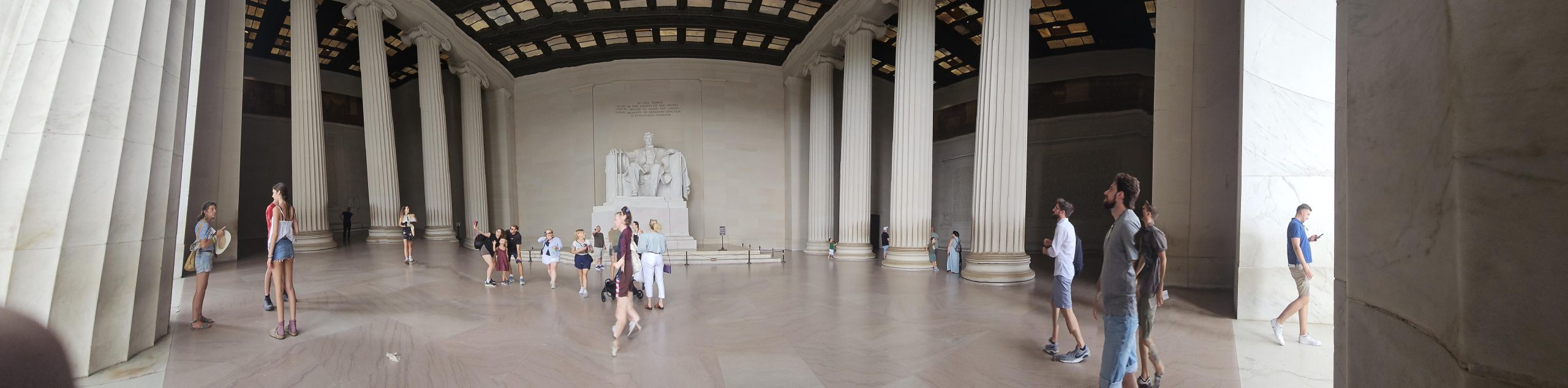
After watching a short movie about the memorial and Undercroft, I walked through the displays and, of course, bought a few souvenirs and stamped labels for addition to my NPS passport book. Then, I took a short elevator ride to the upstairs chamber of the Lincoln Memorial. Again, I went a bit picture-taking happy, taking advantage of the lighter tourist traffic. Below is a panoramic shot of the chamber:
 I had one more stop before leaving. The United Services Automobile Association (USAA) had been given permission to construct a National Military Monument between the memorial and the Reflecting Pool (or what’s left of it). The monument lets visitors search for U.S. military members and take pictures of the displayed names. After a bit of effort on my part and the kind assistance of the two staffpersons on duty, I was able to take pictures of my maternal great-grandfather, father, uncle, and two of my brothers, all of whom served over the years.
As I walked to the trolley pickup point, I saw one of the statues that the current administration had apparently gilded. I also said some nasty words when I saw several empty accessible parking spaces across the way that probably wouldn’t have been there if I had chosen to drive instead.
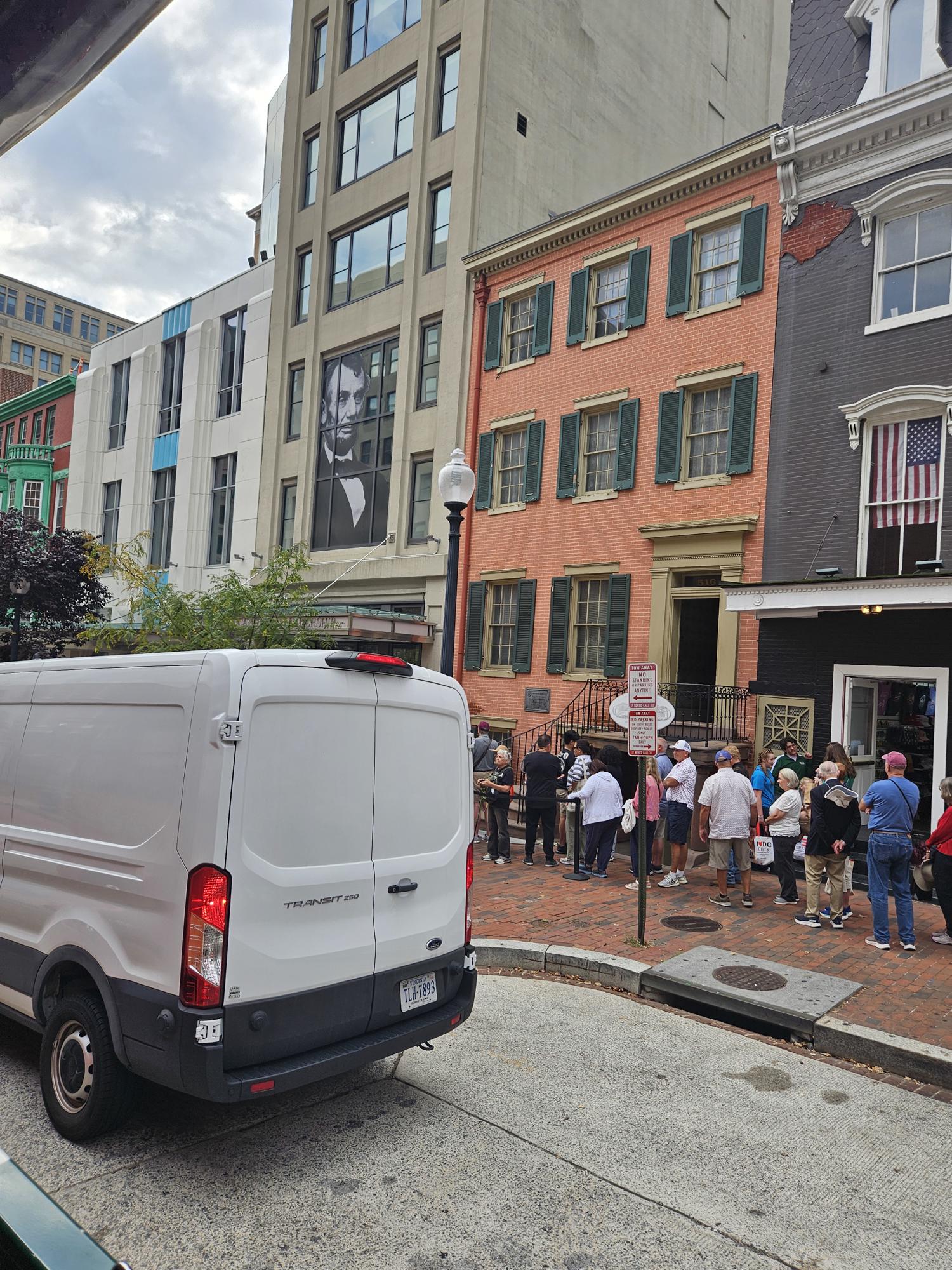
The trolley took us past several other local sites, including Ford’s Theater, where Lincoln had been shot in 1865, and the house where he died from his head injuries. I even photographed the exterior of the Waldorf-Astoria and the Clock Tower I had visited that morning.
We finally returned to Union Station, where I caught the train back to SB. From there, I battled evening rush-hour traffic to the seafood restaurant and had dinner with family.
A number of pictures from the afternoon are below:
The pictures from my birthday adventure are uploaded at https://singin1.click/piwigo/index.php?/category/Seein-the-DMV-Birthday-Trippin-091726.
I hope to be able to take advantage of the lighter tourist traffic to see even more of the DMV exterior sites while the weather permits and museums and other interiors locations as the weather turns cold.